
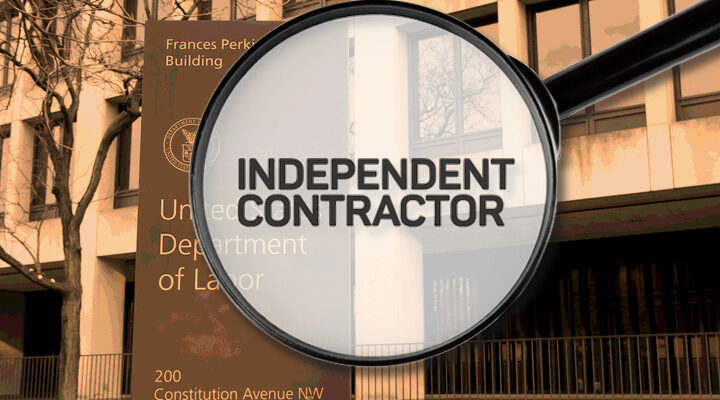

A major shift in how American workers are classified could soon affect millions of jobs across the country. A new federal rule aimed at redefining the difference between independent contractors and employees is beginning to take effect, and businesses in industries ranging from trucking to tech are watching closely.
The change could influence wages, benefits, and workplace protections for many people who currently work as freelancers or gig workers.
Why This Rule Matters Right Now
For years, companies have relied on independent contractors to keep costs down and maintain flexibility. Contractors usually do not receive benefits such as overtime pay, unemployment insurance, or employer-sponsored health coverage.
The new rule from the U.S. Department of Labor tightens the standards used to determine whether someone is truly an independent contractor or should legally be classified as an employee.
That distinction matters because employees are entitled to significantly more protections under federal labor laws.
What the New Rule Changes
Under the updated framework, regulators will apply a broader “economic reality” test to determine worker classification.
Instead of focusing on just a few factors, the rule evaluates several aspects of a worker’s relationship with the company, including:
- Level of control the company has over the worker’s schedule or duties
- Opportunity for profit or loss based on the worker’s business decisions
- Investment in equipment or tools required for the job
- Permanence of the working relationship
- Whether the work is integral to the company’s business
No single factor automatically determines the outcome. Instead, investigators will look at the entire relationship to decide whether a worker is economically dependent on the company.
If the worker is dependent on the company for income, they are more likely to be classified as an employee.
Industries That Could Be Affected
Several industries rely heavily on contractor labor and could see the biggest impact.
Gig economy companies such as ride-share and delivery platforms are among the most closely watched. Drivers have long been classified as contractors, but regulators may examine those arrangements more closely under the new rule.
Other industries that could feel the effects include:
- Trucking and freight logistics
- Construction and home services
- Healthcare staffing
- Media and creative freelancing
- Technology and software development
Some companies may respond by restructuring their contractor relationships, while others could convert contractors into full-time employees.
What This Means for Workers
For workers, the rule could mean greater access to workplace protections.
If reclassified as employees, workers may become eligible for:
- Minimum wage guarantees
- Overtime pay
- Employer-provided benefits
- Workers’ compensation
- Unemployment insurance
Supporters say the rule will prevent companies from misclassifying workers to avoid labor protections.
Labor advocates argue that some companies have used contractor models to shift risks onto workers while maintaining significant control over their work.
Why Some Businesses Are Concerned
Many businesses say the new rule could increase operating costs and reduce flexibility.
Companies that rely on independent contractors often argue that freelancers prefer flexible schedules and project-based work.
Industry groups warn that stricter classification rules could lead to fewer opportunities for freelance work if companies decide it is too risky to use contractors.
Some companies are already reviewing their contracts and consulting labor attorneys to ensure compliance before enforcement actions increase.
Legal Challenges May Still Happen
Changes to worker classification rules often trigger legal disputes, and this update is unlikely to be an exception.
Business organizations have signaled they may challenge the rule in court, arguing that it creates uncertainty and could harm innovation in emerging industries.
Similar disputes have occurred at the state level, especially in states like California where gig-worker laws sparked years of litigation and ballot initiatives.
Federal courts may ultimately decide how broadly the rule can be enforced.
What Workers and Employers Should Do Now
Both workers and businesses may want to review their working arrangements carefully.
Contract agreements, payment structures, and day-to-day work expectations could all become relevant if regulators investigate worker classification.
Employers may consider updating policies, while workers might want to understand how their current classification affects their rights under federal law.
As enforcement begins to ramp up, more disputes about worker status are expected to appear in courts and administrative agencies.
Understanding the difference between a contractor and an employee may soon become more important than ever for both sides of the labor market.
If you’re affected by this change, speaking with a qualified lawyer can help.

