
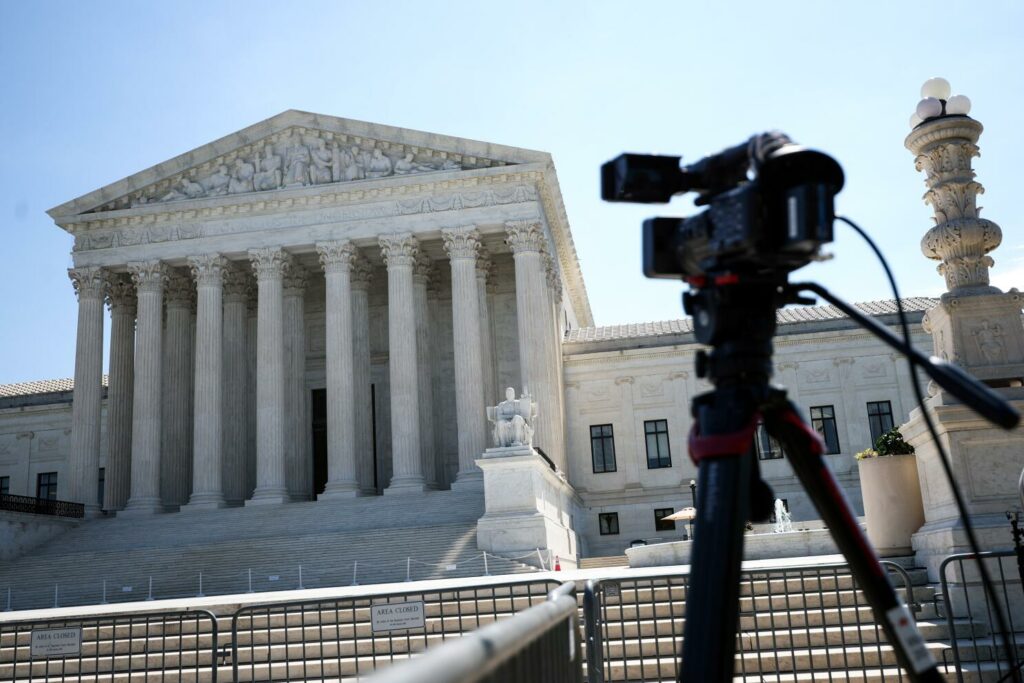
The U.S. Supreme Court is entering one of the most important stretches of its term, with several major decisions expected to affect daily life across the country. The pending cases touch on gun rights, school sports, immigration policy, religious freedom, and the power of government agencies.
For everyday Americans, these rulings could shape what states can regulate, how schools write policies, how immigrants are treated, and how far federal officials can go when enforcing national rules.
The decisions are expected to arrive as the Court closes out its current term, a period when some of the most closely watched cases are often released. That makes this a critical moment for families, workers, students, gun owners, immigrants, and state officials waiting for legal clarity.
Why These Cases Matter Now
Supreme Court decisions do not only affect lawyers and politicians. They often become rules that state governments, schools, employers, police departments, courts, and federal agencies must follow.
A ruling on gun rights can change how states regulate firearms. A ruling on student-athlete rules can affect school districts and families. A ruling on immigration can decide whether certain federal policies survive or collapse.
Because the Supreme Court sits at the top of the American legal system, its decisions can reshape the law nationwide. Even when a case begins in one state, the final ruling can influence similar disputes across the country.
That is why these pending cases are being watched so closely.
Gun Rights Are Back Before the Court
One of the major areas before the Court involves the Second Amendment.
The justices are considering questions about how far governments can go when restricting where people may carry guns and who may legally possess them. These cases come after years of legal fights over how to apply the Supreme Court’s modern gun-rights decisions.
For gun owners, the issue is whether states can create more limits in public or semi-public spaces. For state officials, the question is whether they still have enough room to pass safety rules for crowded areas, private property open to the public, or people considered high risk.
A ruling could affect how states write future gun laws. It could also influence challenges to existing restrictions in lower courts.
Schools May Face New Rules on Student Athletics
Another major issue involves transgender students and school sports.
The Court is expected to address state laws that restrict transgender girls from competing on girls’ sports teams. Supporters of these laws argue that states have a responsibility to protect fairness in female athletics. Opponents argue the laws discriminate against transgender students and violate civil rights protections.
For families and schools, the outcome could be significant.
If the Court upholds broad state restrictions, more states may feel confident passing similar laws. If the Court limits those restrictions, school districts may need to adjust policies to avoid discrimination claims.
The ruling could also affect how courts interpret equal protection rights in education settings.
Immigration Power Remains a Major Legal Fight
Immigration is another area where the Court may issue important guidance.
Recent immigration disputes have raised questions about executive power, federal enforcement, birthright citizenship, and protections for people allowed to live and work in the United States under special programs.
The legal issue is not only whether a specific policy is popular or unpopular. The deeper question is how much power the federal government has to change immigration rules quickly, especially when those changes affect families already living in the country.
For immigrants, a Supreme Court ruling can determine whether they can work, remain with family, continue legal cases, or plan for the future.
For states, the rulings can affect how much power they have to challenge federal immigration decisions.
Religious Freedom Is Also on the Docket
The Court is also dealing with religious freedom questions.
These cases often require the justices to balance individual religious rights against prison rules, workplace rules, school policies, or government regulations.
For ordinary people, religious freedom cases can affect whether government institutions must make exceptions for faith-based practices.
The outcome can be especially important for prisoners, workers, students, and people whose religious practices are not widely understood by officials.
The Court has often taken religious liberty claims seriously in recent years, but every case depends on the facts and the government’s stated reason for limiting a religious practice.
What This Means for States
State governments are watching these cases closely because Supreme Court rulings can either expand or restrict their power.
If the Court sides with state laws, legislatures may move quickly to pass similar rules. If the Court strikes down or limits state action, lawmakers may have to rewrite policies.
This is especially true in areas such as gun regulation, school sports, education rights, and immigration cooperation.
States often test the boundaries of federal law. The Supreme Court then decides where those boundaries actually are.
What This Means for Everyday Americans
The biggest takeaway is simple: Supreme Court rulings can change rights and responsibilities in real life.
A parent may see changes in school rules. A gun owner may face different carry restrictions. An immigrant family may see a case move forward or become harder. A person practicing a minority religion may gain stronger protection against government limits.
These are not abstract legal debates. They affect work, school, safety, identity, family stability, and basic freedoms.
That is why people should pay close attention when the Court releases decisions in these cases.
What Happens Next
Once the Supreme Court issues its rulings, lower courts and government agencies will begin applying them. Some decisions may take effect quickly. Others may lead to more lawsuits over how the ruling should be interpreted.
States may also respond with new laws or revised policies.
For the public, the key will be understanding not just what the Court says, but how the decision changes the rules where they live.
The coming rulings could become some of the most important legal developments of the year.
Lawyers handling cases related to this update can apply to be listed on Lawyers4aj.org.

